




The use or integration of light sources requires precautions to limit exposure to artificial optical radiation (AOR), which can be harmful to the skin and eyes. A photobiological risk assessment can be conducted by LNE experts to prevent such exposure in accordance with European Directive 2006/25/EC and Decree No. 2010-750.
These assessments can be conducted both as part of workplace prevention initiatives (CSSCT, HSE/QSE, HR) and during the design of industrial products or medical devices. LNE supports you in conducting a comprehensive photobiological risk assessment of your workstations and products to :
- Ensure employee health and safety
- Meet regulatory requirements
- Reduce the risk of accidents and occupational diseases
- Obtain reliable and recognized results
- Implement appropriate preventive measures
How can you conduct a reliable assessment tailored to your situation ?
The photobiological risk analysis is conducted in accordance with the NF EN 62471 standard and is based on a comparison between workers’ actual exposure and the Exposure Limit Values (ELVs) defined by regulations.
There are three possible scenarios :
-
Technical data is sufficient
When the source characteristics (spectrum, intensity, geometry) indicate that there is no risk, you receive a quick, documented conclusion. -
A potential risk is identified
Our experts then perform a precise calculation of the exposure level, taking into account :
- technical data,
- the work environment,
- actual conditions of use.
-
No reliable data is available
We conduct on-site or laboratory measurements using specialized equipment to accurately assess your employees’ exposure.
Our measurements rely on state-of-the-art equipment: UV, visible, and infrared spectroradiometers.
As a result, for each source posing a risk, you receive from LNE :
- a quantified assessment of exposure,
- a comparison to regulatory limits,
- an estimate of maximum safe exposure durations,
- objective data to define your preventive measures.
Applicable Regulations and Standards
Monitoring of exposure to artificial optical radiation (AOR) is conducted in accordance with the following regulations and standards :
- European Directive 2006/25/EC : minimum health and safety requirements regarding the exposure of workers to risks arising from physical agents (artificial optical radiation).
- Decree No. 2010-750 (Ministry of Labor) : Protection of workers against risks associated with optical radiation.
- Standard NF EN IEC 62471 - 2006 : Photobiological safety of lamps and equipment using lamps.
LNE also contributes to the development of standards and standardization in the field of optics at the French (UF76 “Optical radiation—safety, use, and exposure”), European, and international levels.
Additional Services
For manufacturers of industrial and medical equipment, LNE is also capable of performing additional measurements in accordance with the following standards :
- IEC 60825-1 2014 >> Safety of laser devices
- IEC 60601-2-22 >> Laser medical devices (surgical, aesthetic, therapeutic, and diagnostic laser devices)
- IEC 60601-2-57 >> Non-laser medical devices (therapeutic, diagnostic, monitoring, and cosmetic/aesthetic applications)
Products covered
This service is intended for all professional environments using artificial light sources that emit visible and invisible radiation (black light, UV lamps, lighting sources, laser sources), including :
Industrial sector :
- arc welding,
- molten metals,
- UV lamps for drying or antibacterial treatment,
- projectors and high-intensity lighting (LED lamps, neon lights, etc.).
Medical and aesthetic sector :
- Operating room surgical lights,
- light therapy devices,
- laser and non-laser devices,
- black light and diagnostic equipment.
- Medical devices emitting blue light,
- etc.
Examples of products emitting artificial optical radiation in the medical and industrial sectors
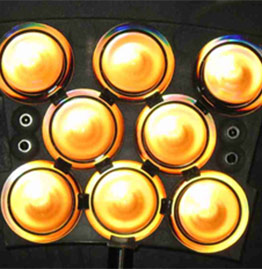
Operating theatre lighting (scialytic)

Medical device emitting blue light
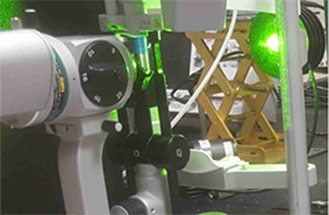
Ophthalmic medical laser treatment device
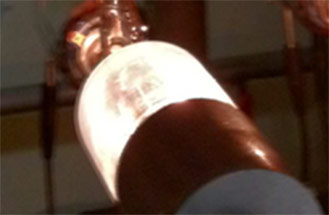
1200°C heat radiation source
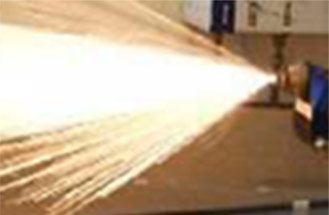
Source projection of molten material
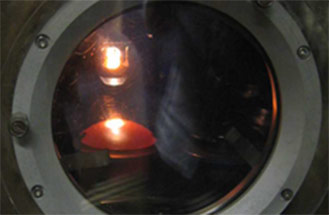
Source of thermal radiation 2700°C
Operating theatre lighting (scialytic)
Medical device emitting blue light
Ophthalmic medical laser treatment device
1200°C heat radiation source
Source projection of molten material
Source of thermal radiation 2700°C
Why choose LNE
By choosing LNE, you benefit from :
- Expertise recognized nationally and internationally
Active participation in French, European, and international standardization efforts in the field of optical radiation. - Complete independence
A public institution, a leader in French metrology, guaranteeing neutrality, transparency, and trust. - Accreditation unique in France
The only organization offering the full range of photonic metrology services under Cofrac* accreditation. - Reliable and enforceable results
Compliant with regulatory requirements and usable in your compliance and audit processes.
*Cofrac calibration accreditation No.2-22 (in French) and Cofrac testing accreditation No. 1-0606 (in French); sites and scopes available at cofrac.fr