


Image
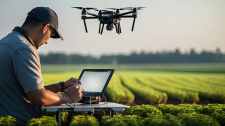





To be placed on the European Union market, civilian drones must comply with the requirements of Regulation (EU) 2019/945 from 1 January 2026. LNE offers the required conformity tests, as well as a range of complementary services to ensure the quality, reliability, and performance of both civilian and military drones.
The drone market in France is experiencing sustained growth, driven by the rise of professional and recreational uses. Numerous sectors such as construction, civil engineering, energy, security, defense, agriculture, emergency services, and logistics are now integrating these aerial systems to improve efficiency and precision.
At the same time, regulatory requirements concerning drones are becoming increasingly strict, particularly with Regulation (EU) 2019/945, which governs the placing on the market of civilian drones and their components. In this context, manufacturers, importers, and distributors must guarantee high levels of safety, performance, and compliance to meet the expectations of both users and authorities.
LNE offers a range of services aimed at supporting them in the qualification, evaluation and compliance of their drones.
Regulation (EU) 2019/945 sets out essential requirements (radio/communications, electromagnetic compatibility, battery safety, acoustics, etc.), compliance with which must be demonstrated through testing, analysis, and documentation.
To meet these compliance requirements, LNE offers the following services:
Drones use radio frequencies for piloting, navigation, and data transmission. They must therefore comply with the requirements of the RED Directive (2014/53/EU), which is integrated into the compliance process under Regulation 2019/945.
Radio testing verifies that:
This ensures compliance with the wireless communication technical specifications of the regulation.
>> Learn more about the radio tests offered
Regulation (EU) 2019/945 requires that drones not cause or be affected by other electronic equipment. This aligns with the core requirements of the EMC Directive (2014/30/EU), which also applies to CE marking, a prerequisite for placing a product on the market.
EMC testing verifies that the drone:
>> Learn more about Electromagnetic compatibility tests
Electrical safety tests
Drones incorporate numerous electrical and electronic components as well as a number of moving parts necessary for their proper functioning. Therefore, as specified in Regulation 2019/945, if a drone cannot be considered a toy as described in Directive 2009/48, it must be considered a machine and comply with the applicable health and safety requirements set out in the Machinery Directive 2006/42/EC (replaced by Regulation 2023/1230 which will enter into force in January 2027).
To meet some of these requirements, testing is necessary. This testing allows us to:
>>Learn more about Electrical safety tests
As drones become increasingly connected (Wi-Fi, BLE, LTE, etc.), they are consequently becoming vulnerable to cyberattacks. To meet the essential requirements of the RED Directive (2014/53/EU), addressing these threats and conducting functional tests may be necessary.
Through its subsidiary BYCB, LNE offers cybersecurity testing and assessments that enable manufacturers to significantly reduce these risks and strengthen the credibility and trust in their products
>> Learn more about Cybersecurity Testing
In order to regulate noise pollution, a growing issue for the integration of drones into our urban and natural environments, the latter must have a declaration of their noise level according to the terms defined in the regulations (Regulation (EU) 2019/945 amended by Regulation (EU) 2020/1058, which sets the technical requirements for drones, including the guaranteed acoustic power level).
For the required technical and documentary procedures, LNE can assist you with:
>> Learn more about acoustic tests
Although not explicitly mandated by Regulation (EU) 2019/945, these tests are strongly recommended to guarantee the quality—reliability, safety, durability, robustness—of your drones, especially for professional or intensive use. They will also allow you to demonstrate your technical expertise in addressing current and future challenges and to differentiate yourself from your competitors.
Drones must be designed to withstand normal operating conditions, including vibrations, particularly those caused by flight, transport, or environmental conditions.
Vibration and shock testing allows us to:
>> Learn more about vibration and shock tests
Identifying design or packaging weaknesses improves drone reliability, reduces warranty returns, ensures out-of-the-box performance, and optimizes product protection during distribution.
These tests allow us to:
>> Learn more about transportation simulation
Drones must be able to operate in a wide range of environmental conditions, including temperature, humidity, etc., depending on their intended use.
Climate testing ensures that:
>> Learn more about climatic tests
This lighting system (position, orientation and anti-collision lights) is a key safety element for civilian drones. It improves the visibility and detection of devices in the airspace, particularly during night flights, beyond visual line of sight (BVLOS) or in densely populated urban areas.
LNE assists you in the qualification of your lighting systems (position lights, orientation lights, anti-collision lights: maneuverability lights, auxiliary lights, visibility lights, flashing and strobe lights, alternating lights, etc.) to ensure a high level of safety and compliance with industry best practices. LNE is also preparing to support you with the upcoming PR NF EN 4709-004 standard.
Tests offered:
>> Learn more about the tests offered (in french)
More and more drones are using AI algorithms for autonomous navigation, obstacle avoidance, and mission optimization. With over 15 years of experience in the field, LNE offers the following services through its dedicated AI platform:
>> Learn more about the AI evaluation and tests
Although military drones—that is, unmanned aircraft operated by the armed forces or other government agencies for defense, police, customs, rescue, and other missions—do not fall within the scope of Regulation (EU) 2019/945, LNE's services enable companies to meet the required criteria for systems operating in demanding environments, such as defense and security missions.
By leveraging its laboratories and recognized testing methodologies, LNE supports military manufacturers in the qualification of their drones, either in conjunction with or in line with industry-specific standards and frameworks (including MIL-STD). This approach demonstrates a high level of technical expertise and quality, and strengthens institutional clients' confidence in the performance of their drones.
*Accreditation Numbers, locations, and scopes available at cofrac.fr